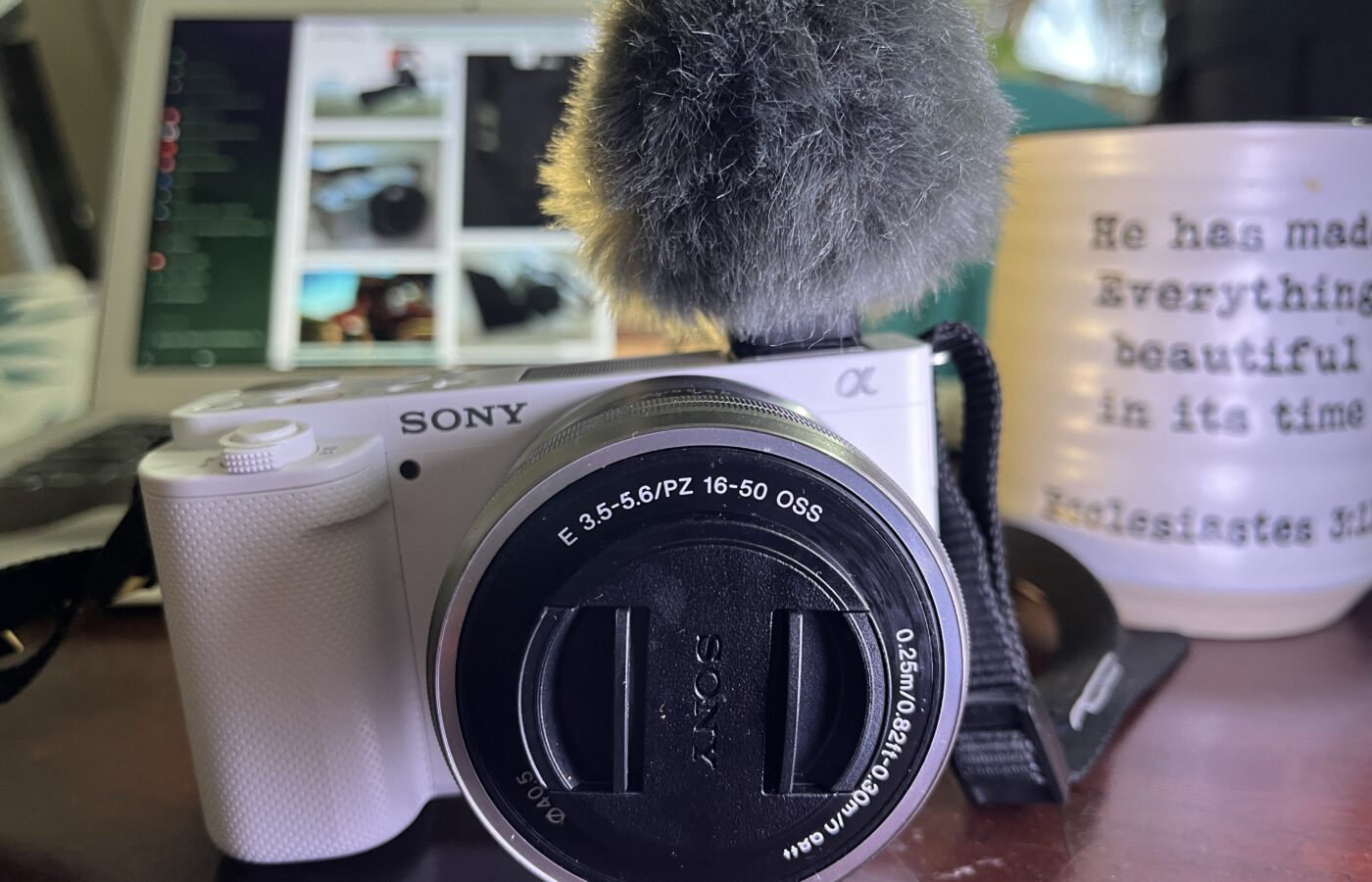
Sony ZV-E10 Review: The Camera That Grew With Me (And Why It Still Earns Its Place in 2026)

I did not wake up one day and decide to buy a Sony camera. I researched my way into it — slowly, carefully, the way most of us in the Caribbean have to when a return means over $60 (USD) shipping label and an unknown waiting period.
Seven to eight months of reviews. Dozens of YouTube rabbit holes. And a very real question in the back of my mind: Is this actually worth it, or am I just caught up in the hype?
Four years later, the Sony ZV-E10 is still in my kit. So let me tell you what I know now that I didn’t know then.
Why I Bought It (And What I Was Actually Trying to Solve)
When I started making YouTube videos during my fourth year of medical school, I was recording on an iPhone 8. Back camera. A mini tripod with flexible legs hooked onto a chair. And a large mirror propped up so I could see whether I was in frame — because there was no flip screen, and repositioning the phone every take was eating into the only window I had before my toddler came home from daycare.
That setup was not sustainable.
The Go Pro 9 came next — I was doing road trips, I loved the form factor, it made sense at the time. But editing footage from a GoPro is a particular kind of misery I would not wish on anyone. Then came the iPhone 13 Mini. Shoots in 4K, yes. But crisp and cinematic the way the YouTubers I admired looked? Not quite.
I knew what I wanted. I wanted what Vanessa Lau had. What Taylor Lloyd had. That soft, intentional, I clearly spent money on this image quality. And after months of due diligence, I landed on the Sony ZV-E10.
The Camera, Four Years In
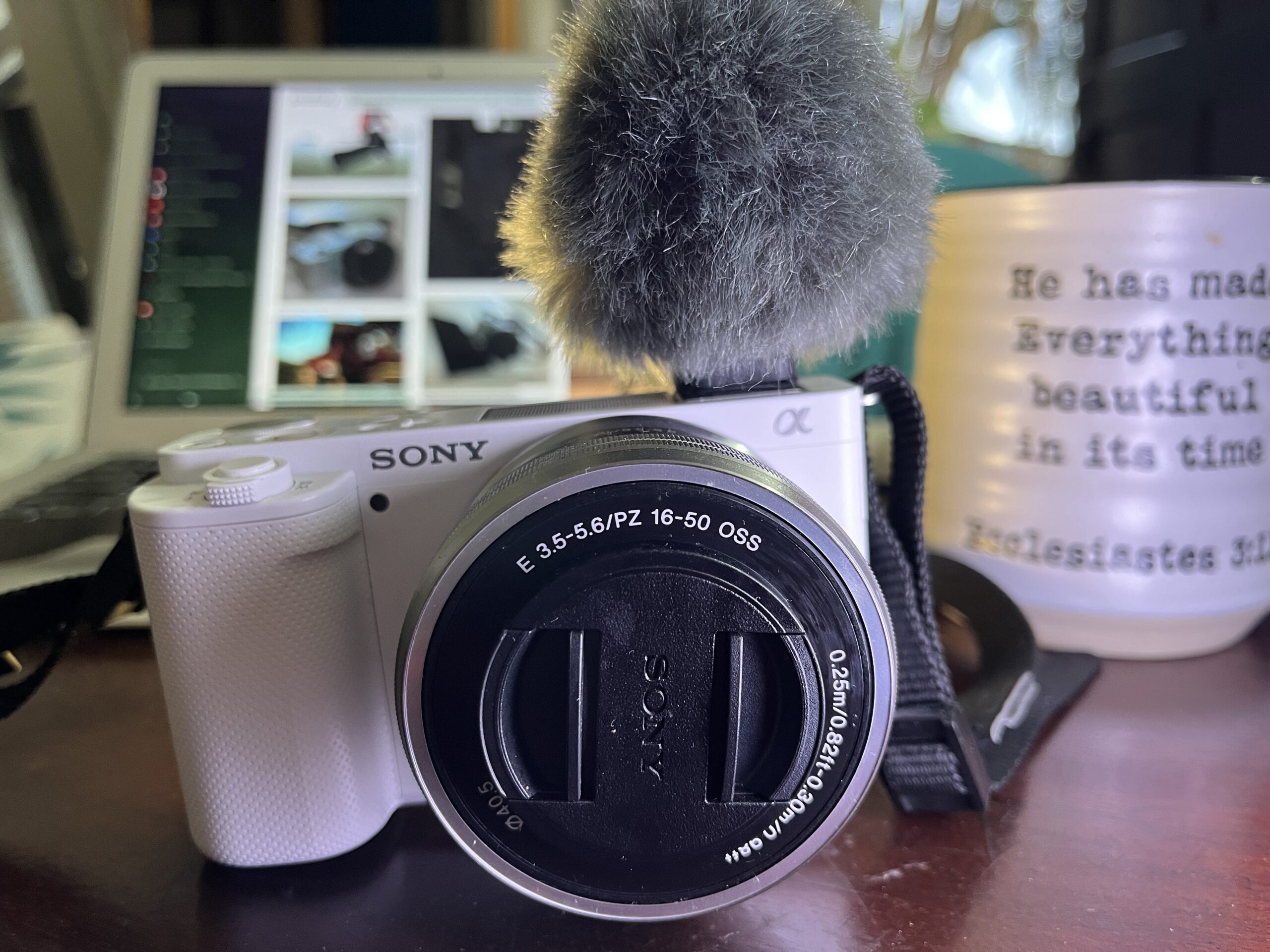
The Sony ZV-E10 is an APS-C mirrorless camera with interchangeable lenses, a flip screen, and a form factor that works equally well on a desk or in your hand while walking through a market. I bought it with the standard kit lens — the 16–50mm — and that is still the lens I use today.
Here is what four years of actual use looks like: YouTube videos (when I was making them), content for Luxe Health, photos of my vegetable garden, pictures with my son. Not a single one of those use cases has required me to reach for something else.
What Works — And Works Well
The image quality is the reason you buy this camera. Shoot outdoors in good light and the footage is genuinely beautiful. The APS-C sensor produces that soft background separation that phone cameras spend their entire engineering budget trying to replicate. For Caribbean content creators — bright skies, natural light, vibrant environments — this camera is in its element.
The flip screen changed how I work. Before this camera, I was using a mirror to monitor myself. Now I flip the screen forward and I can see exactly what the lens sees. No guessing. No repositioning. No wasted time. For anyone shooting alone — which is most of us who are building something on the side — this feature is not optional; it is essential.
The interchangeable lens system means you are not locked in. This is the biggest long-term argument for the ZV-E10 over a fixed-lens compact or a phone. As your skills grow and your budget expands, you can add a portrait lens, a wide-angle, a prime — the camera body stays the same. That matters when every purchase involves international shipping.
The form factor is genuinely vlog-friendly. Small enough to travel with. Light enough to hold extended. It does not feel like you are carrying professional gear. It feels like you are just carrying a camera.
What to Know Before You Buy
Battery life is the honest limitation. Two to three hours on a single charge for short-form content; around 1 hour for long-form content. If you are using this as a studio camera — which many content creators do — plug it directly into power via USB so you are not watching the battery indicator like a hawk mid-recording. If you are shooting on the go, budget for at least two to three extra batteries before you leave the store.
The flip screen is not a touchscreen. You can see yourself. You cannot tap to focus or navigate the menu with your finger. There is an updated version — the ZV-E10 II — that addresses several of these quality-of-life limitations, and if you are buying new in 2026, it is worth comparing both options.
Low light is not this camera’s strongest suit. If your recording space does not have good lighting, this camera will show you exactly how much light it needs to perform. The cinematic quality you are chasing requires decent lighting — (not a ring light), a window, and a softbox. The camera is not forgiving in dim rooms, the way newer sensors have become.
Should You Buy It From the Caribbean?
Yes — with full awareness of what that means.
The ZV-E10 is still a capable, well-built camera that punches above its price point. In a market where you cannot walk into a store and try something before you buy it, where returns require real logistics planning, and where every purchase needs to earn its keep, this camera earns its keep.
It is not the most cutting-edge thing available in 2026. Cameras with smaller bodies and stronger low-light performance exist now. But if you are starting out in content creation and you want a camera that will grow with you — a real camera, with interchangeable lenses, a flip screen, and image quality — the ZV-E10 is still a sound investment.
I have used mine for four years. I am not reaching for anything else.
The Summary
| What I Love | What to Know |
|---|---|
| APS-C sensor, beautiful image quality | Battery lasts 2–3 hours max |
| Flip screen for solo recording | Flip screen is not a touchscreen |
| Interchangeable lens system | Low light requires good lighting setup |
| Compact, travel-friendly form factor | Newer options exist in 2026 |
| Still holds up for 4K content | Returns from the Caribbean are expensive — research first |
Affiliate Disclosure: This post contains affiliate links. If you purchase through my links, I may earn a small commission at no extra cost to you. I only recommend products I personally own and genuinely use. Thank you for supporting, By Josanne.
[…] a fill light for content creation. When I’m shooting product photos with my Sony ZV-E10 for this blog, the Ace 25C works as a background/fill light. Paired with the magnetic diffuser cap, […]